Going Through, Not Passing Over

I've been thinking a lot about holidays this year, particularly the Jewish holiday of Passover.

Passover is a time of spiritual renewal, of looking back in order to see ahead. A broad theme of Passover is freedom, something so vast, that I've scarcely tried to contemplate it; being someone who prefers to find the macro in the close-by mundane.

I'm also someone who seeks to understand what spiritual traditions have in common rather than how they differ.

The Friday before the holiday weekend, I met a child in the hospital where I work whose artwork contained just these confluences of large and small, distant and nearby, to which I would add, past and present. This young six year old girl had lost her father to incarceration and her mother to death by addiction.

When I first heard about her, I wasn't sure what to expect. Certainly not the vibrant being who walked into the playroom eager to engage in the activity I had chosen: creating a paper Easter basket.

I like this activity because by creating a series of folds and cuts in a square piece of paper and manipulating them, you can create a real container.

Flora sat down and pulled one of the folded pieces over to her place and began to copy the words, "Happy Easter," onto one of the squares. With great detail and many felt tip markers, she painstakingly created designs and drawings on each surface of what would become the inside and the outside of the basket.

I find it intriguing that at this stage, while the child is painting or drawing, the inside and outside are not yet determined. Enclosure can go either way, depending what she chooses to do. A metaphorical exercise about the public and private selves.

At any rate, after Flora had filled both sides of the paper, I stapled her basket together-but she wasn't done quite yet. she took squares of soft, pastel patterned fleece and glued one to each surface of what had turned into the inside of the box.

She proudly showed me her basket, asking, "but where are the eggs?" I went on my own egg hunt and found several colored plastic eggs. I handed them to her and she tucked them into the bottom of her basket.

It seemed to me that this small child exquisitely exemplifies the theme of Passover. She lost her original home and was forced to leave for a new one (she is lovingly cared for by a relative); she had created her own safe transitional home in the basket.

Adaptation

Last weekend, I drove south to Mt. Madonna, a retreat center located on top of a mountain populated by redwoods and wildflowers. I'd come to take down my exhibit, "Pieced Reflections," and to help my friend, Stacey Vetter, install hers.

When I hung my art, I knew that Jon Kabat-Zinn, the great teacher of mindfulness meditation, would be teaching a workshop beginning that evening. I enjoyed imagining him walking by my work and taking it in. A special bonus was selling work to two of his students from Texas and Colorado.

A variety of teachers come to Mt. Madonna from all over the country. A workshop scheduled while Stacey's exhibit is up is, "The Second Half of Life," led by Angeles Arrien, cultural anthropologist and author of the Four Fold Way. Intrigued by the title I picked up a postcard about it and read these words:

"In every culture, in every age, there is a turning point in life. At this threshold begins the greatest adventure; the second half of life. When you find courage to change at midlife, a miracle happens and you are opened, softened, strengthened, and deepened; prepared to create your legacy-an imprint of your dream for our world that can only come true in the second half of life."

I was inspired by the words: "create your legacy-your dream for the world." In this youth obsessed culture, it is positively counter-cultural to believe that our greatest adventure still lays ahead.

I've set off on my first adventure with the 'year of watercolor' project. My challenge to create a watercolor each day for a year has become a practice similar to meditation; a time when bits of undigested feelings and thought rise to the surface.

I've stared down the demons of comparison, attachment and judgment with what I hope is a corresponding firm but loving kindness.

Painting every day allows me to see how thoroughly events of the previous day influence the way I take hold of the brush, the amount of paint on the bristles, the control, or lack there of, with which color streams onto paper. I've determined that I will return to paint each day, even if the watercolor from the day before looks like a smeary mess. I don't need to share them, but they remind me that a lotus can only grow out of the mud.

Six Degrees of Creativity 2

In my daily life, I work hard to carve out studio time. I treasure these precious hours of creativity that bring sanity and grace to my hectic, scheduled life and I didn't think there was room to add "one more thing." However, when I was invited to teach a class for Six Degrees of Creativity 2, I was intrigued and tempted. Six Degrees of Creativity 2 is an on-line art workshop and community, sponsored by the Art Therapy Alliance and includes six different workshops. Each is offered by a different instructor from the art therapy community and explores hands-on art making concepts and techniques as means for social change and transformation.

Although I thought long and hard before taking on that "one more thing," I knew that teaching one of the six classes could add a new dimension to my studio time, especially since I could choose what I wanted to teach. So, what did I want to learn more about?

I like to teach around my current studio obsessions, but for a class lasting six months, I needed to find something that would provide continuity, no matter what my immediate focus. I decided to explore how to help artists and other creatives build and maintain a studio practice; nurturing a conscious habit of doing something over and over --or what Csikszentmihalyi called "flow:" that single minded immersion into an activity.

Writer Elizabeth Bishop came up with wonderful line. She said that, "the thing we want from great art is the same necessary for its creation, and that is a self-forgetful, perfectly useless concentration."

I decided to call my class, Still Point in a Changing World: Creating a Mindful Studio Practice. We'll concentrate on cultivating that perfectly 'useless' or mindful concentration that drives a studio practice.

Six Degrees of Creativity goes on sale April 1 - June 30, 2012 and you can find out more by clicking here.

Cultivating Patience

This week I've been thinking about the patients I see at work and the health changes I'm encountering in my own life as I go through the proverbial aging process. I've made a conscious decision to not be one of those people who ruminates and makes a running commentary on their health.

And yet, it's hard to have patience with myself as I wind my way through my 50s.  Who among us can really say we have patience with ourselves? Patience with others maybe, sick children at work definitely, but not our own physical deficits.

Then one day, I had a "driveway moment" while listening to NPR's Talk of the Nation last week. Allan Lokos, a psychologist and Buddhist was speaking on patience: "...the body is changing. And we look in the mirror and we realize one day, oh, the muscle tone is not what it was. And sometimes, we can become very angry at our own body, impatient with ourselves. And I think it's very important to realize, that is the nature of the body. Everything is changing; the body is changing. So why not go with that so that we don't go to the finish line just resisting and unhappy, but going with what is natural order instead?"

Listening to the words melted something inside me, that part that has no patience with my own shortcomings. I decided if that if patience was what I needed to be able to work and thrive, then I could be kinder to myself. And by showing myself kindness, I could reflect that kindness outward to others and through my art.

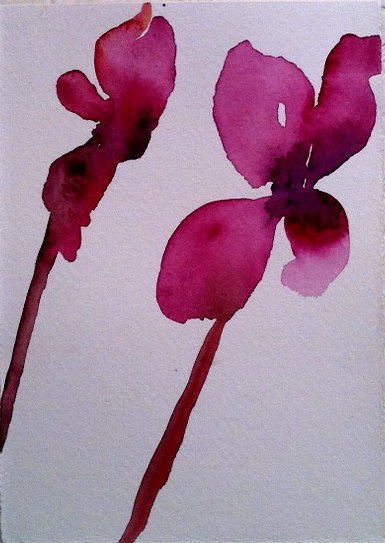
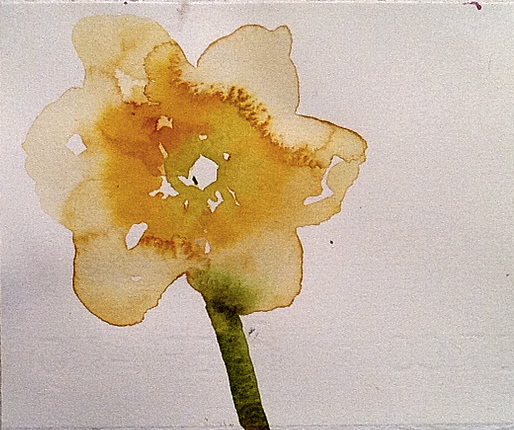
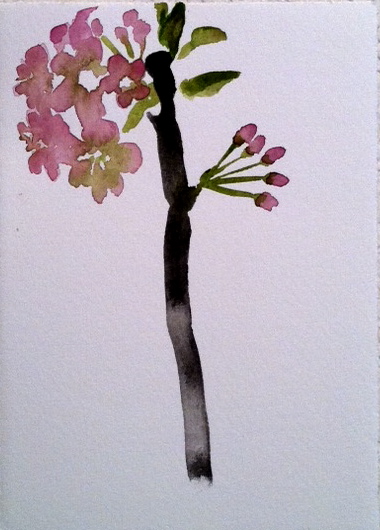
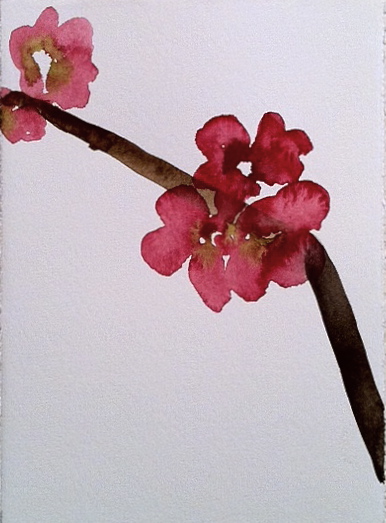
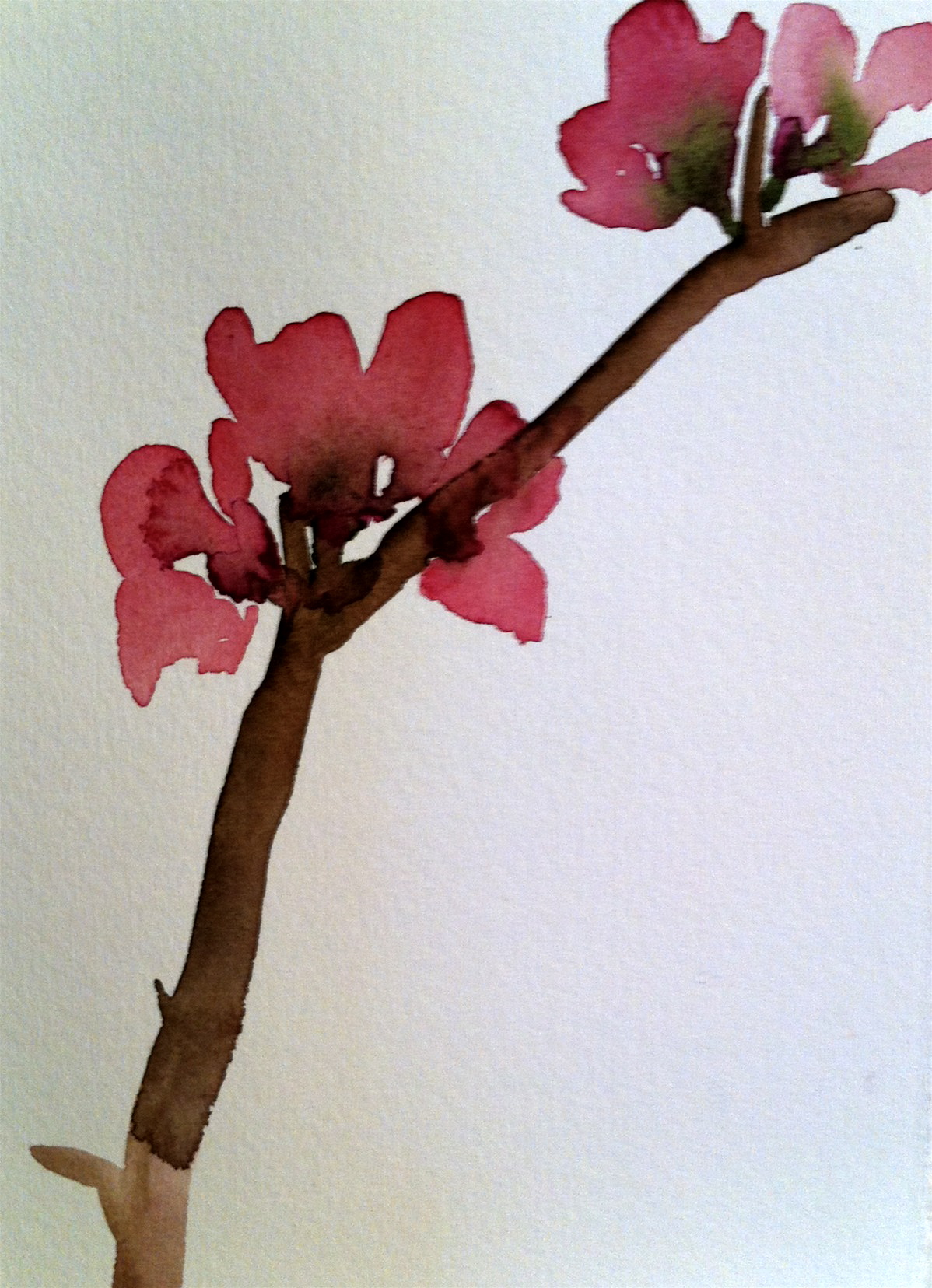
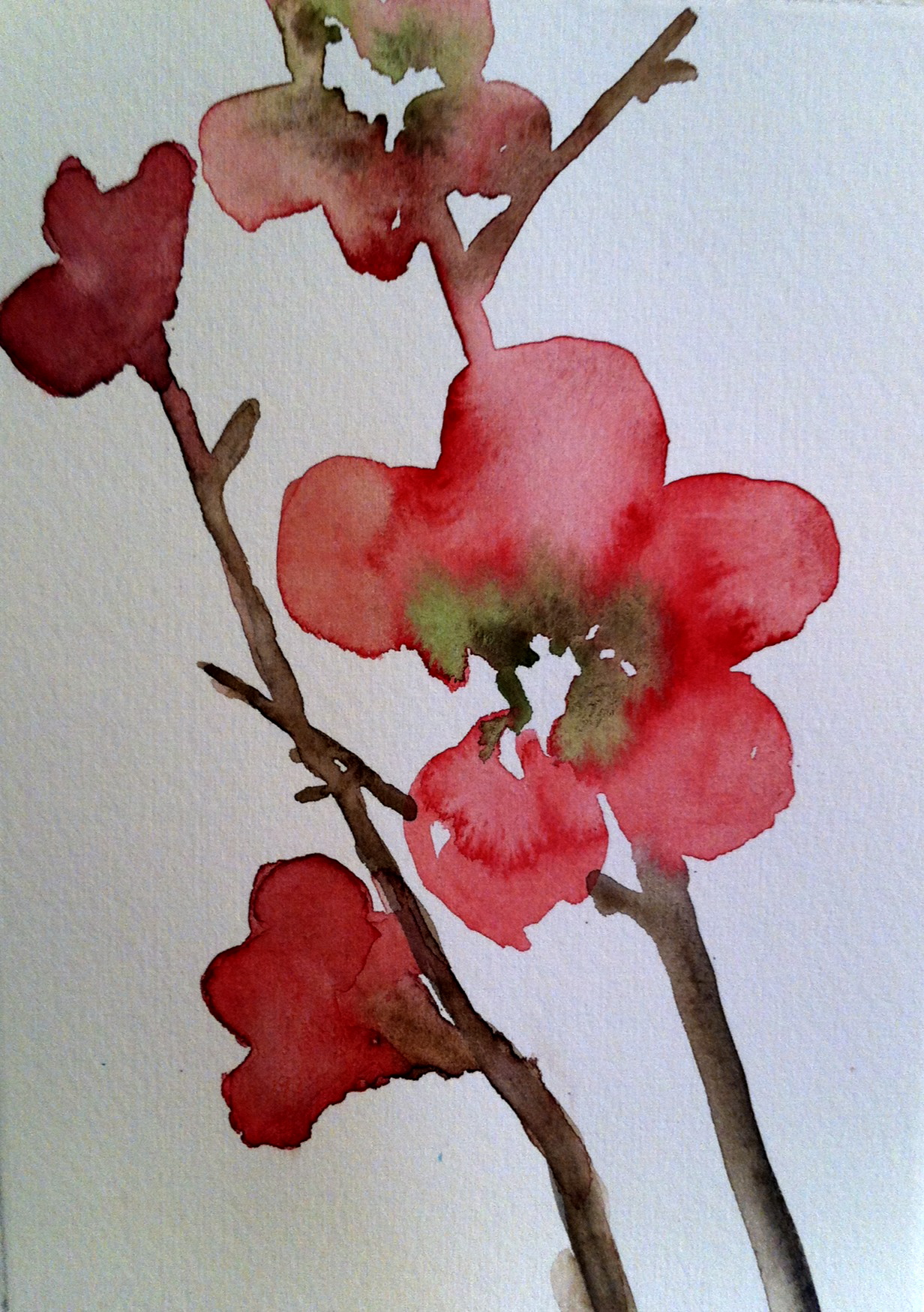
Here are some of this week's watercolors, painted while I practiced patience.

A Year of Watercolor

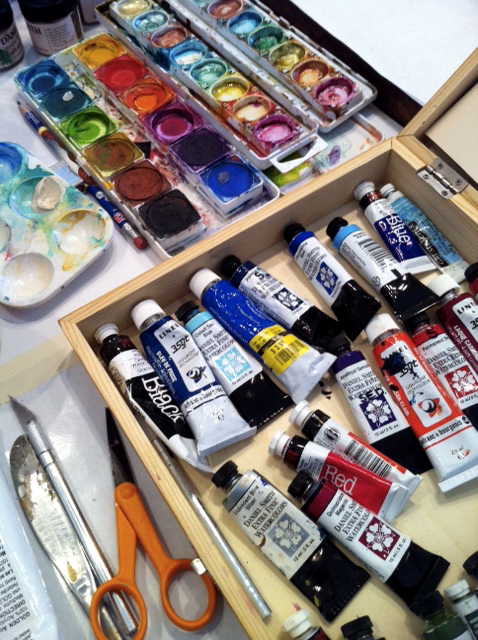
Since I've been studying watercolor, I wanted to find a way to create a practice. In the same way as one would create a meditation practice, I wanted a painting practice. No judgement, just watching drops of color as they arise, disperse and flow together.

'My Year of Watercolor' started February 14, this meant that I would paint one watercolor each day for the next 364 days.  That was the only parameter I set for my practice, just the dailiness of it. There was no specific amount of time, no size of paper, color scheme, no decision to go black and white. But then I started asking myself those very same questions about which I had not wanted to set parameters!

What size should the paper be?

What kind of paper should I use? Should it all be the same kind of  paper?

How long should I paint?

What if I need to sketch  first and don't have time to watercolor?

If you notice that the operative word in these questions is should, you're not alone. I noticed it too.

Then, impatient to begin, I started painting on watercolor paper I had in my studio and set about to ordering more and quit my fussing. In short, I jumped into painting mode. On my walks I had to resist the temptation to slip into neighboring yards to clip blossom-bedecked twigs.

The daily routine has become a refuge in my overly-crowded days, an excuse to meditate.