Plant and Painting Share Common Roots

Amaranth, ©2011, Hannah Hunter, Collage (paper, fabric and watercolor on panel)

Amaranth. I was walking up the stairs to my studio, trying to come up with a name for a panel I'd just finished and this name came into my head. Curious to see what it meant, I looked it up.

Here's what I found: Amaranthus, collectively known as amaranth, is a wide ranging genus of herbs. The root of the word comes from the Greek, "amarantos," or "unfading" and it combined, sometime in the word's history, with the the Greek work for flower, "anthos."

A small purple flower, Amaranth provides a sturdy source of nutrition and serves to support sustainable land care in Africa.

Unfading flower. I like that. At in this time in the world, when so much seems unsure in so many countries, the world, at least my world, needs some reassurance about those things that do not fade.
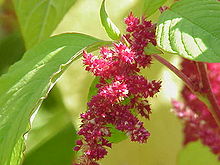
Amaranth, the flower

I think about the children with whom I work. Day after day this week, I ran my eyes down the census to see if anything had changed; a chance for a miracle cure. No, there were still too many children whose diagnoses were grim. (Isn't one too many?) I wanted to push against this--to create a moment of fun, a small space for healing. Although I am not a doctor or a nurse, I am an artist and the healing I can offer is moments of relief, spaces for joy, a dose of hope.

Into this space comes what does not fade: art, prayer, laughter and love. Amaranth.
New Leaf on Life

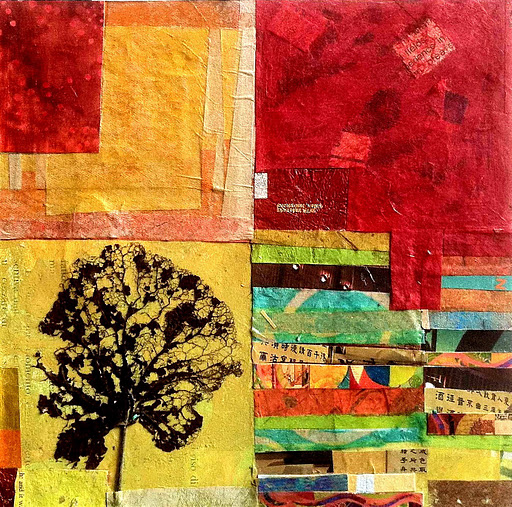
This little panel is going on view next week at one of my favorite local art spots,  The Artery. I've been experimenting with collage on hardboard panels, creating rectangles of stacked horizontal strips of paper juxtaposed with rectangles of various shapes and sizes. These short stacks are reminiscent of books, books that I pile by my nightstand in hopes of making my way through them, one by one, before I fall asleep at night.

Arbor Vitae, ©2011, Hannah K. Hunter, 8" x 8," Collage (paper, leaf, watercolor)

The title, Arbor Vitae, or tree of life,  refers to my obsession with the Tree of Life and also makes an allusion to the way in which Jews refer to the Torah as "Etz Chaim,"  the tree of life.

I've noticed that with the advent of Facebook and blogs, it's harder and harder to sustain my attention on a single book. I'm working on that, focusing more on the books surrounding my bed and a little less with the omnipresent white rectangle on my kitchen table. Books: sweet trees of life.

Give Love: A Community Art Project

My blog friend and fellow art therapist, Phoenix Peacock is creating an amazing on and off-line art journal project about community: Give Love: A Community Art Project. She's keeping an art journal about her own community based project and created a means for others to participate. To find out how, click here. Her instruction is to art journal about a community member who has positively influenced your life. This could be a teacher, student, coach, neighbor, a stranger, anyone who is not related to you. Your interaction(s) could have occurred at any point in your life. To learn more about art journaling, check out Kelley Brown's excellent blog: Art Journaling as A Creative Process.

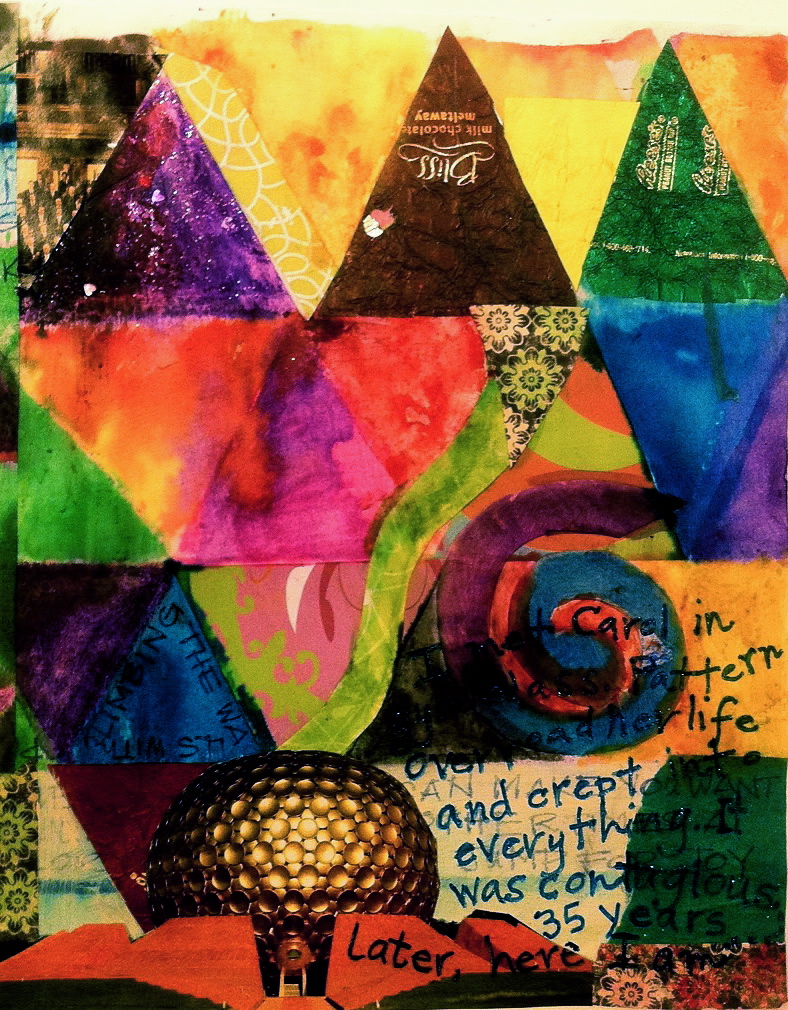
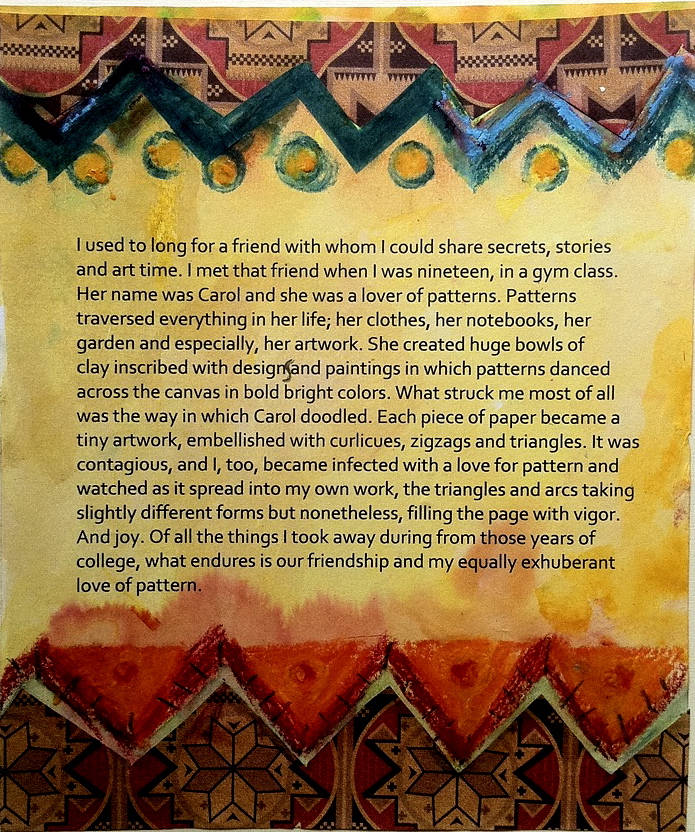
I've been working on my own page during our daily art group at the hospital. As it emerged, I realized it was about my old and dear friend from art school days, Carol Spindel, a gifted author and artist.

This is what I wrote about my friend on the back side of the page:

I'm forever grateful to Carol for introducing me to the world of pattern because along with words and colors, it now forms the foundation of my art work. Cheers Carol!

Open the Doors to Healing

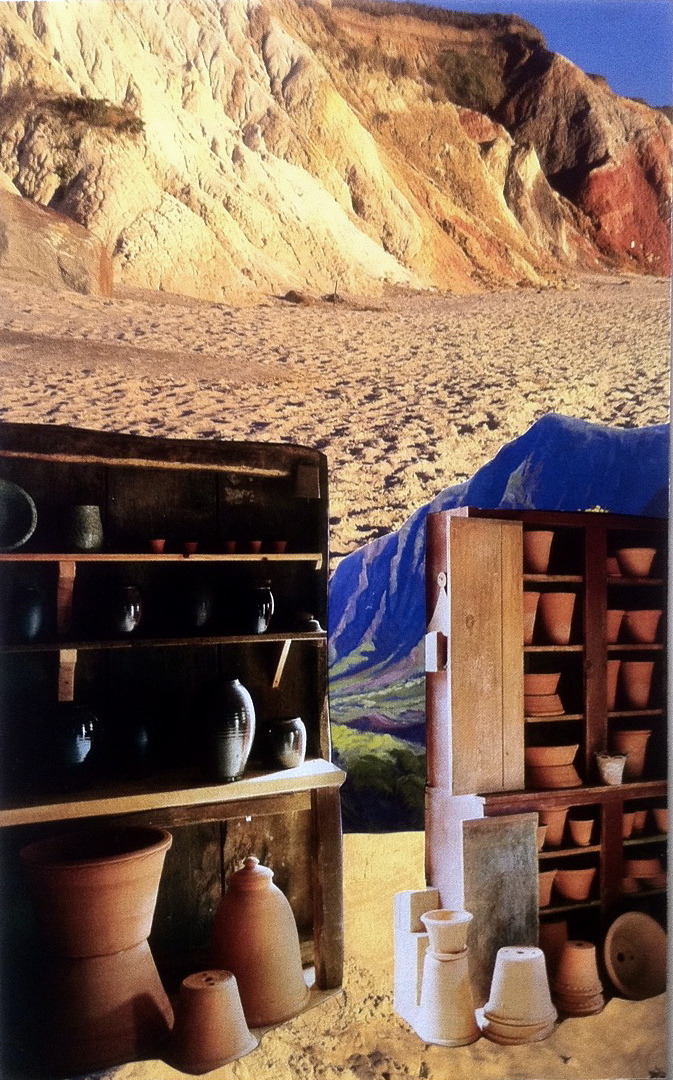
©2011, H. Hunter, Desert Renewal, SoulCollage®

The title of last week's SoulCollage® workshop at the UC Davis Cancer Center was "Renewal; Exploring the the way archetypes can help us to find renewal in the midst of our daily lives." Without knowing it, I was practically begging several archetypes to enter my own life.

I showed up promptly at nine filled with the news of Japan; its cumulative disasters of earthquake, tsunami and nuclear uncertainty. I walked up to the door and it was locked.
I wanted to wilt like a flower and go home. (But what had I experienced so far? An insurmountable barrier?) Instead, I called Plant Operation and Management.
As if by magic, a white truck drove right up the sidewalk toward me and a smiling women in a navy overall got out and opened up the building. "Did you get the call?" I asked her. "No, but I saw you standing there," she replied. My world was restored.
In order to get the group together quickly, I asked for help; putting participants to work unwrapping fresh pairs of scissors, cutting boards and x-acto knives.  Even though I felt tongue tied by world events, I needed to keep going and talk about finding linkages in the heady and ineffable subject matter of archetypes. (Could you get a better set up for a trickster archetype to stick out its foot?)
We introduced ourselves by selecting an image that signified renewal. When one person showed a photograph of a red maple against what looked to be a Japanese garden, I commented how much that reminded me of her hometown, San Francisco, a place of renewal for her.
Unexpectedly, the whole group began to laugh. "Hannah--can you see--those are the red rock walls of a canyon!" The gods were definitely playing with me today: A locked door, mistaking a canyon for the Japanese Tea Garden.
©2011, A. McSweeny, Cat Love, SoulCollage®

The women were game to explore the notion of how archetypes might play out in their lives to bring renewal. As they searched the table for compelling images, quiet took over the room,which deepened to an engaged silence as the work progressed. 

We arranged the finished cards in a circle and walked clockwise around the table, readying ourselves for sharing. One woman commented that, "I can't believe it--all those pictures, just laid out on the table in no particular order--and out of that chaos, come these perfect cards that carry so much meaning."  

It is my prayer that amongst the chaos of disaster in Japan, the people continue to recover pieces of their lives, bring them together and that healing becomes the order of the land.

Thread Talk

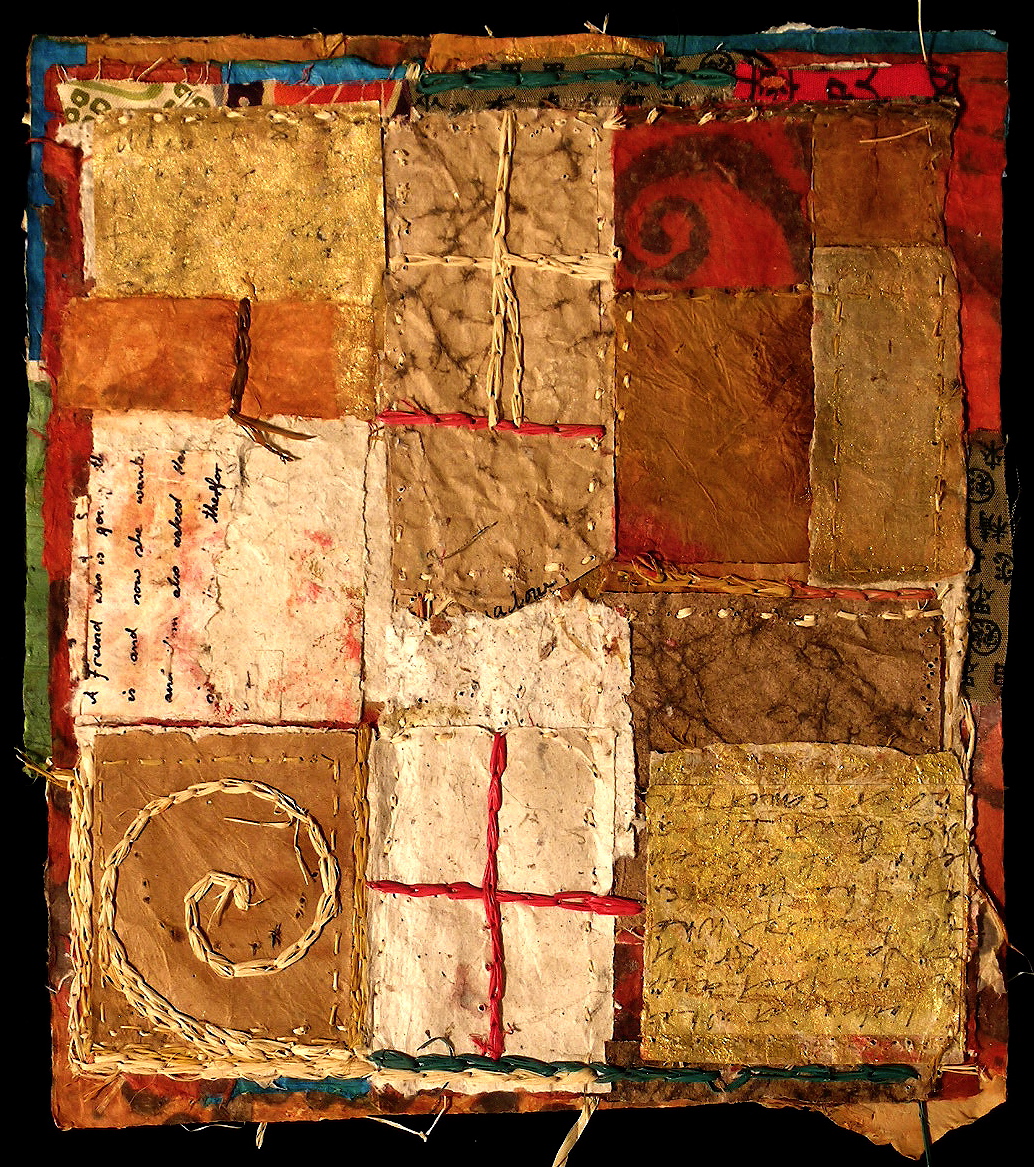
© 2007, H. Hunter, Polihaliai Beach, mixed media

How often, after all, do we take the time to look back, review and in this way, renew our relationship to our work? Yesterday I had the pleasure of speaking to a local guild of embroiderers about my artwork. I decided that if I was going to share some history with them, I needed to do some digging.

After some searching, I came up with three separate images: a stack of books, a marsh and an Amish quilt. Pretty disparate images--but like reducing a fraction to the lowest common denominator, I had come up with the structural bones of my creative process, each one grounded in some vital part of my history.

The books: I often spent my summer days stretched out on a sofa or a hammock, after carefully arranging a pile of books beside me which I devoured one at a time.

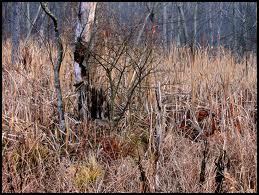
Michigan Marshland

Marsh: a scene from early childhood in Maine where I spent time chasing peepers and later, growing up in Michigan, where instead of peepers, I gathered reeds for weaving.

"Amish Abstractions"

Amish quilts: when I saw my first one in the University of Iowa Art Museum, it struck me as a visual form of haiku. With only a few colors, a quilt conjured a landscape.

It tickles me that as I look at my present work, I find traces of the words, reeds and quilts which informed my early visual blueprint.

©2007, H. Hunter, Dancing Rings 1, mixed media

It makes me think that there is something something mysterious yet inevitable about the images which dwell within us and arise out of our experience, recombining in powerful ways that we cannot predict.

Succeeding experiences build upon each other and yet, as we work with them in our studios, they come into being, slowly but surely, like a photograph appearing for the first time in its alchemical bath.