Clear Sight

I’ve been doing some thinking on my vacation; going away is often a way of coming closer to myself, of discovering what’s been stored up inside me for lo these many months.

Landing in Kauai, I assumed I would magically relax into a state of being where one activity flowed into another--not the hurried hula I find myself performing on most working days.

While there were indeed many delicious activities; ocean walks, tropical flowers and rainbows, I was surprised to meet up with some of my oldest and most familiar demons; the ones that incessantly wish to compare myself to others who seem to be more, do more, achieve more.

A hold-over from childhood, these thought pests seemed more intense than usual, even creeping into my dreams. My sister, who had joined us, noted that sometimes in Hawaii, it seems that one’s stored up issues just seep out like lava--a kind of “detoxifying” if you will.

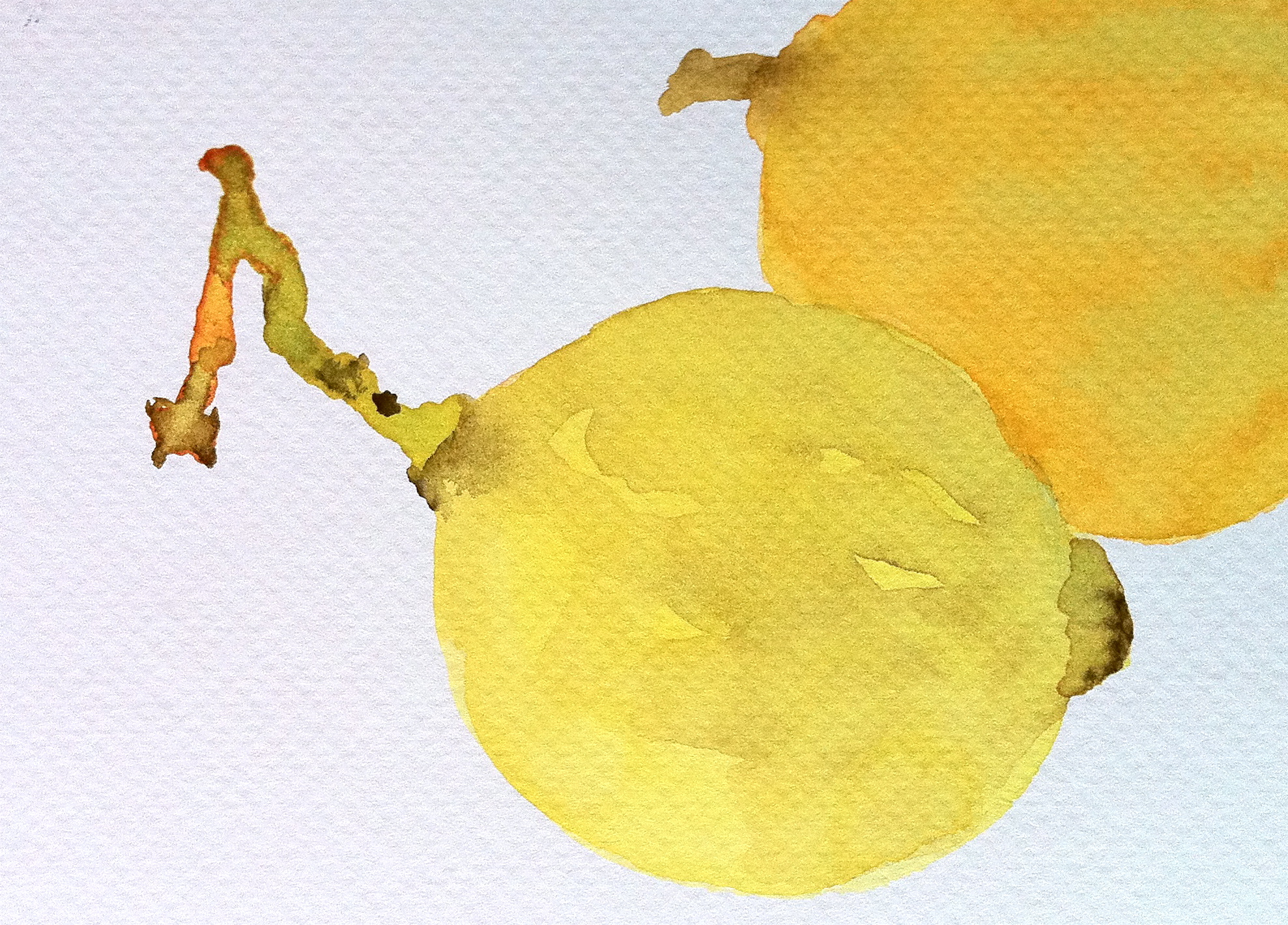
While the gremlins nibbled and morning doves cooed, I tried to set up a studio practice--sparer than my normal routine, but something to do in order to counter my inner detractors. I decided to sit down for an hour a day with watercolors and just paint something. I picked the simplest forms I could find; lemons and limes picked from trees  growing in the yard and tiny birds of paradise that grew by the outdoor shower.

As I painted, I observed my initial antipathy to mixing the color green. It brought up memories of phthalocyanine green oil and viridian oil in undergraduate school and my messy complicated affair with oils). I persevered and, finally, loosened my association of mixing colors which matched my mood and began instead to evoke a feeling of relationship with the fruits I studied.
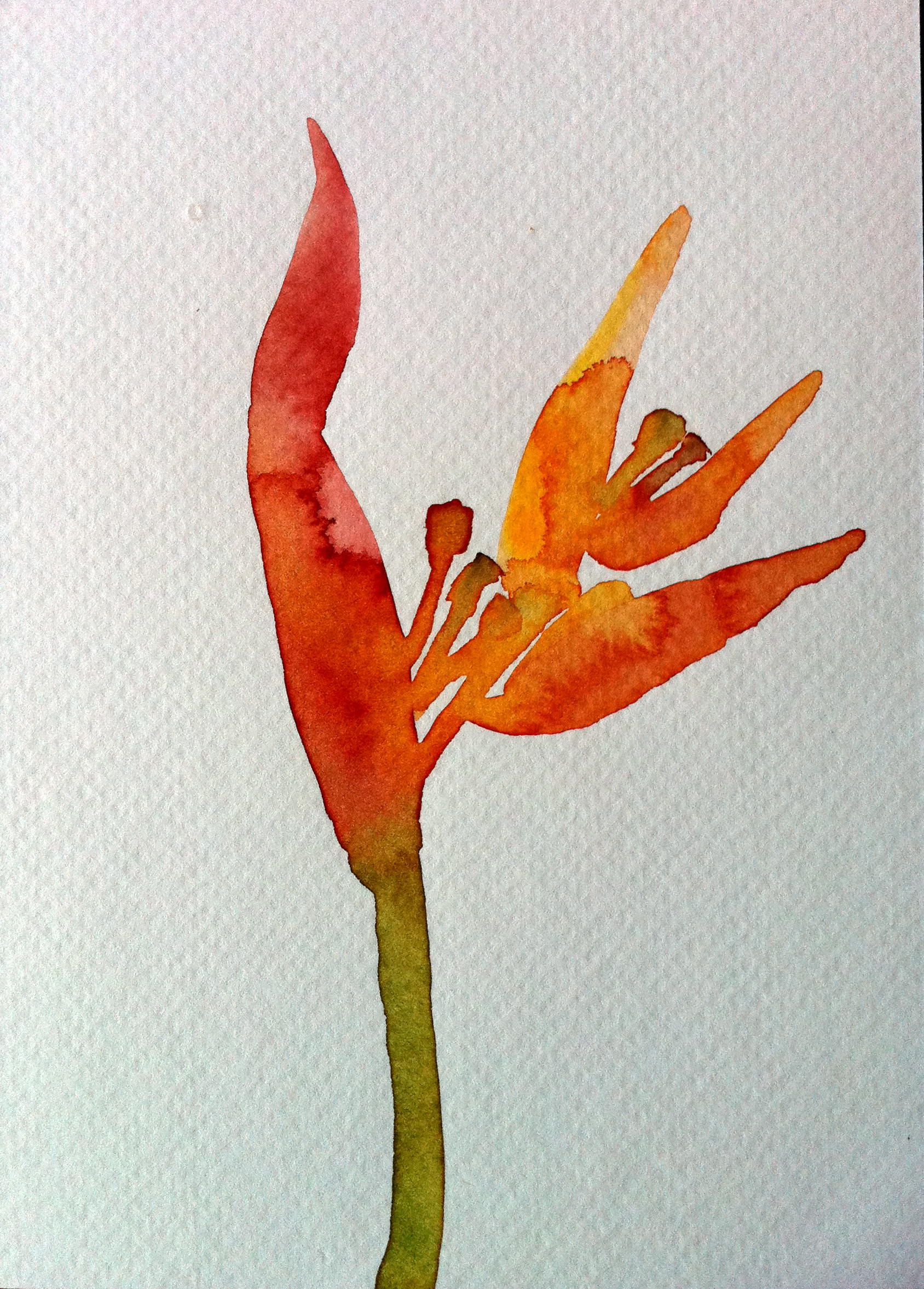
What I also observed, as the days peeled off, was that after painting I experienced a feeling of clairvoyance--clairvoyance in the French sense of the word, which literally means: “clear sight.” The fabulous leaf and flower forms that surrounded me seemed heightened, standing out as if I were staring at an intricate Indian miniature. I experienced an intensity of seeing similar to the high that practitioners of yoga describe. I felt loose and clear headed. I breathed effortlessly.
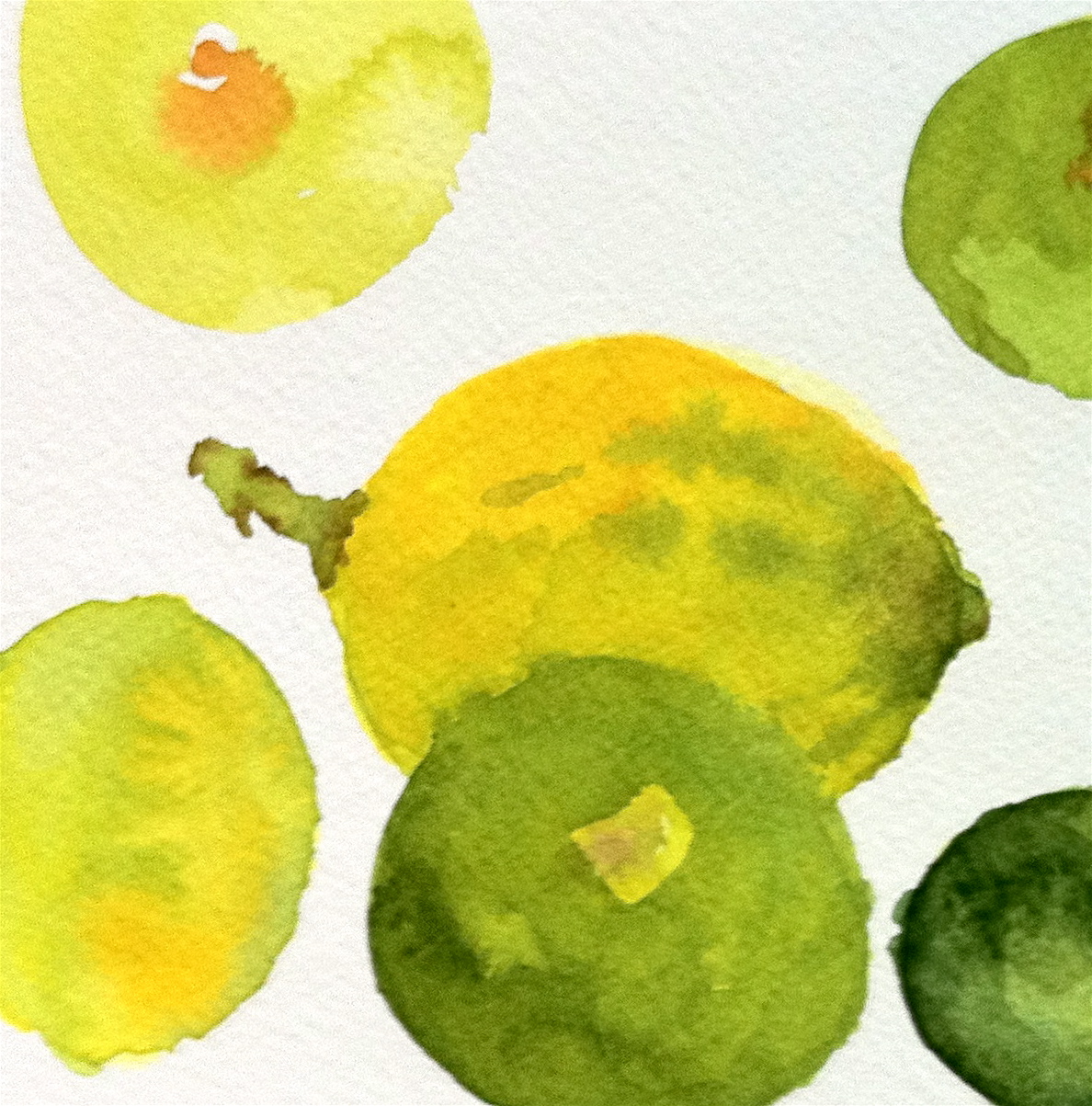
I’d like to claim, after this time away, that I’ve returned to normal life with no worries, sustained clear sight and a pack of good watercolors. But reality, like river water after a storm, is muddy. Spending time with transparent colors and resplendent foliage allowed me to see the landscape through the mist; there are always more layers--I understood again that we can never really remove ourselves from the complex relationships of people and situations, the endless rich entanglements of this world. However, like finding a blossom in the Hawaiian jungle, I can always locate something to focus on.

A Process of Trial and Multicolored Error

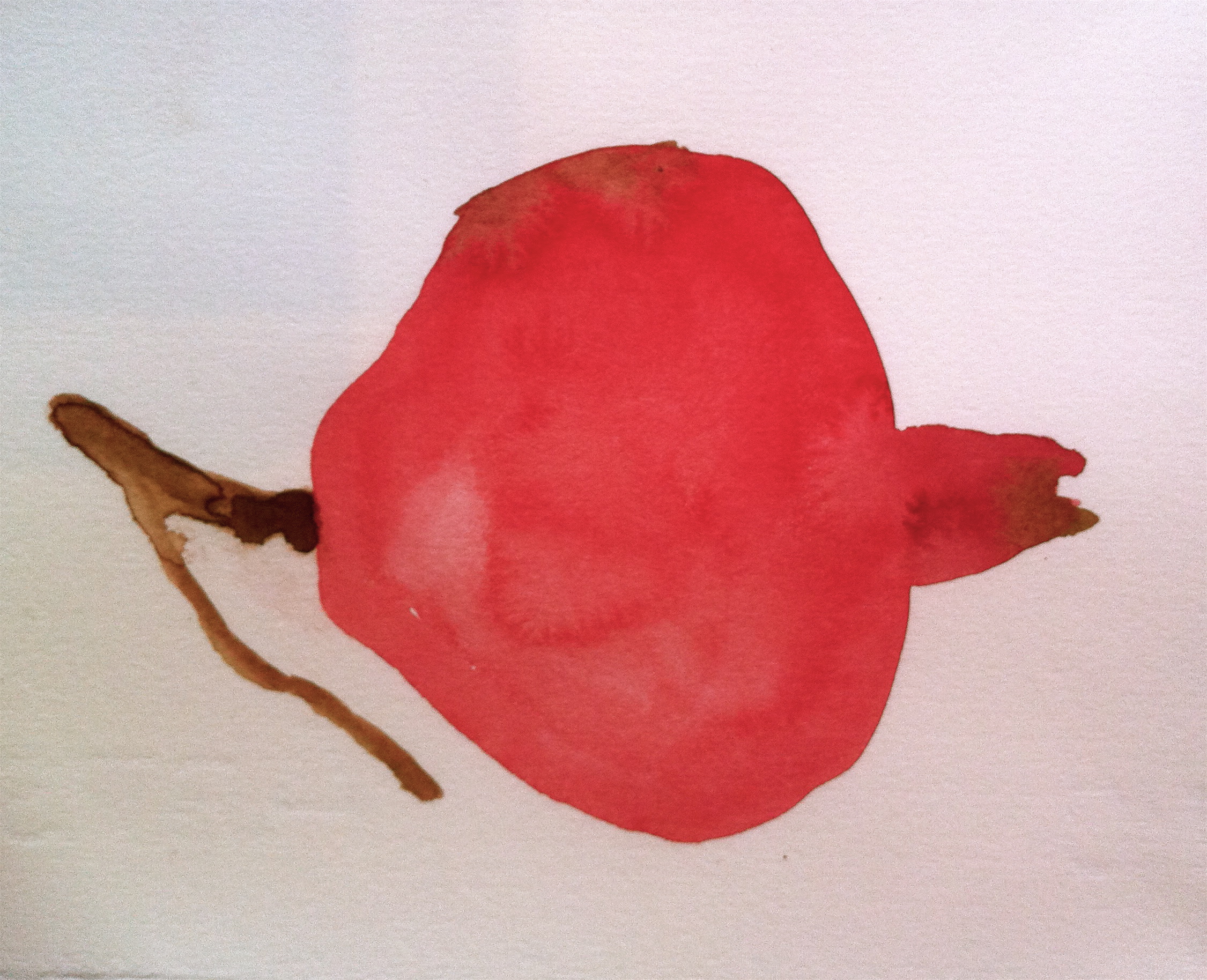
I arrived at my friend Stacey's last week with a lot of questions. I wanted to hear where she stood on the matter of staining and non staining pigments, her thoughts on hot vs cold press paper and if there was a better pigment or paper to use.

Stacey obligingly pulled out a reference book, The Wilcox Guide to the Best Watercolor Paints by Michael Wilcox and showed it to me. On each page there was a precis of every shade of watercolor known to mankind. She offered to loan me the book but the sheer weight of the information was daunting.

When I pressed her for the essential facts on these issues, I could feel her resistance. She explained that rather than reading about pigments, she prefers to work with the colors herself, testing one, then another with a whole cadre of colors. She opened a black notebook to a two page spread with the most mouthwatering series of colors I've seen in a while.

What was most interesting about the samples she had painted was that there was no

uniformity. You could see crystallization in some of the colors and in others, like viridian, there were speckles of plum and rust. "So, is that sedimentary?" I asked, pointing to the viridian wash. She told me that the paint water had remnants of many colors suspended in it--or, as she put it, "it's dirty water."

It was apparent to me that once again, I was facing the creative continuum of choice, trying to decide between two ways of approaching a painting or drawing. When I arrived that at her studio that morning, looking for answers, Stacey was telling me to experiment, to work by trial and error, always heading in the direction that that elicits energy and joy, rather than the road marked "I really should...."

Simply put," she said,  "avoid the 'shoulds'!! "If it seems like you have a choice and one way is going to bring joy, go that way."

My 7 Links

Marriage Circa 2011, ©2011, H.Hunter, Collage: paper and acrylic paint

I recently accepted Donna Iona Drozda's invitation to participate in a project: My 7 Links Project. For this project, each blogger chooses 7 different posts to fit seven unique categories and then invites up to 5 more bloggers to do the same, and so on, as a way of uniting "bloggers from all sectors in an endeavor to share lessons learned and...to... create a bank of long but not forgotten blog posts..."

A timely invitation and one that I thought about because it seemed to me a perfect chance to look over the year's post, to form in my mind a gestalt of what I'd written, a means of seeing the road I'd traveled and perhaps the road I might choose to take in the year ahead.

Like the doors on an advent calendar, I invite you to open up one or more of these links and see what you discover.

Most helpful: Young Adult Bereavement Art Group/Art Therapy in Action: This post proved to be helpful in two ways; one for me, because the post reflects how much I learned about the grief process of young adults, but also because this information is useful to those people who wish to start an art therapy based bereavement support group in their own community.

Where I Live, ©2000, H. Hunter, 15" x 18", Acrylic & Caran d'ache

Most popular: Finding Sanctuary: addresses our universal need to find a safe and sacred space. Nature + art = one of the most effective ways to find it.

Didn't quite get the attention it deserved: Timing is Everything: There's a lot packed into this little post with M.S. Merwin's poem. Spring opens our eyes with its fleeting beauty and we're reminded, once again, of the transience and beauty of life.

Most proud of: Art Therapy 101: No questions here. Art Therapy 101, about my daughter who was my first teacher in art therapy, wrote itself.

Peonies at the Ogunquit Museum of American Art

Most beautiful: Accidental Journey: Places of the soul--all of us have them and I accidentally traveled back to mine in this trip to Maine. Here I share images and thoughts of this magical journey, especially one gorgeous blush colored peony.

Surprising Success: A Different Kind of Summer: I had no idea when I wrote about spending the summer in the studio that it would elicit so many responses. At the hospital, when I'm asked what I did on the weekend, my answer is always the same: "I was in my studio." (And it's always a pleasure.)

Most controversial: New Beginnings: The controversy here is subjective within the quilting world--I suddenly felt confronted by an entirely different way of seeing the quilting process, one I hadn't considered and which challenged me to re-examine my approach to the aesthestics of art quilts.

And now some nominations--4 blogs with entirely different focuses--something to satisfy different parts of my personality.

From the Scattergood Farm: written by two teachers at Scattergood Friends School (my daughter's high school alma mater) where students both study and work a living farm. In this new blog, they present some radical new ideas for school lunch. Check this out!

Patricia Scarborough: I love Patty's posts--witty and wry and half a continent away, I love to read her observations and see her plein air plainscapes. 

Dwelling Here Now: One of the first blogs I discovered, Anthony Lawlor takes a spiritual approach to architecture and the architecture of thought. 

Blue Sky Dreaming: Blue Sky's open minded approach to her subject matter and materials intrigues and inspires lots of us in the mixed media world.

Circles Within Circles


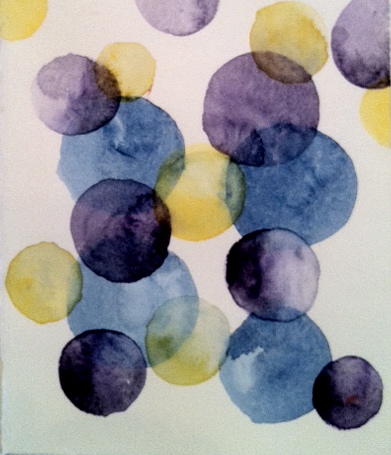
When I last wrote about painting persimmons with Stacey Vetter, a number of people asked me to keep them "posted." I had the best of intentions but my production took a sharp downturn high up in the hills of Carmel Valley.

While my son Ben played golf on the tiered greens of Saint Lucia Preserve, I hid myself behind a Valley Oak and began to paint acorns and oak leaves. The sun was hot and rather than creating distinct layers,  the walnut ink pooled on paper. After an hour, I had only a few clusters to show for my efforts. Discouraged, I decided to report my findings to Stacey the next week.

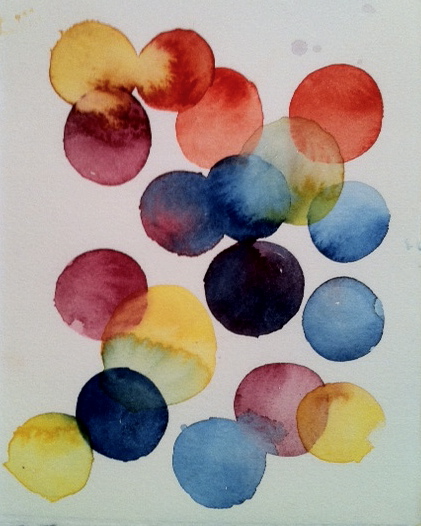
Stacey took a survey of my results and prescribed painting circles. "Circles??" I asked. Not one to stand on ceremony, she picked up her brush and began to demonstrate what she meant. As I watched her, I noticed that she handled the brush with a deftness born of deep practice. The brush seemed to swirl around with no hesitation.

I took up my brush, discovering that it intended design on its own--and performed the opposite of hers. Frustrated, I reminded myself of the revered book by Shunryu Suzuki: "Zen Mind, Beginner's Mind." "It's O.K." I assured myself. I have to work against my own grain when I put myself in a place where I know very little and I need to have a high tolerance for mistakes.

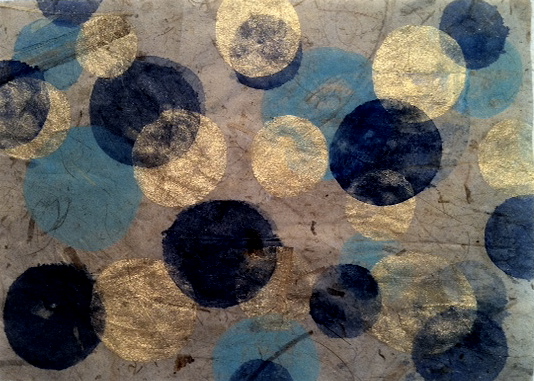
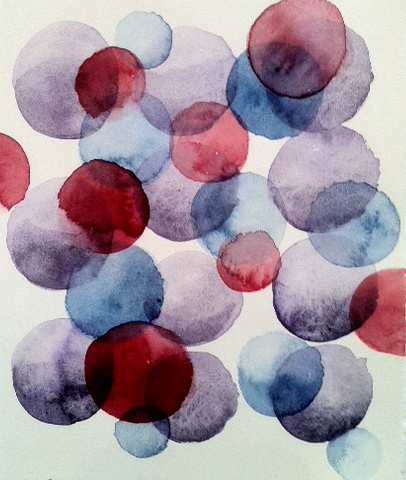
I decided to persevere. As I did, I began to notice little things: how as I came around the bend of the curve and the brush seemed to be running out of ink, it would disperse just enough ink to easily close the circle. Slowly, as I repeated the circles, I began to feel the delight I experienced as a child on ice skates when I figured out how to spin. Soon I was spinning the ink. Circles and more circles. On hot press. On cold press. On rice paper. On banana paper.

My next challenge was to create a shading in the circle. Stacey explained that I would need to paint a piece of the circle and then stop; making sure to leave an organic shape, quickly rinse my brush and then, with precisely the amount of water as I had just shed of pigment, finish off the circle.

A few days later at a studio time with my friend Linda, a landscape water colorist, I decided to try my hand at it. She sat down to complete a gorgeous landscape of Lake Tahoe and I brought out my circles. She glanced over after a while and noted that how boring it must be. Her comment caught me by surprise. I had become completely involved in the act of touching paint to paper and watching it react.

In its own way, it was as fascinating as observing a patient in her hospital room. How did the first stroke lay down? (Is the patient alone in her room?) What kind of organic shape should I leave? (What kind of expression does the patient have? What is the tone of their speech?) Does the paint granulate as it begins to dry? Is it a staining or non staining pigment? (Does she want to cover the entire paper or work in just a tiny corner?)

Like the beginning of William Blake's poem, "Auguries of Innocence," it seemed that I'd discovered "a world in a grain of sand."

To see a world in a grain of sand, And a heaven in a wild flower, Hold infinity in the palm of your hand And eternity in an hour.

After I explained to Linda what I was seeing, she too got caught up and soon we were both exploring the depths of her vast collection of colors. They were seductive, those circles, and she couldn't resist trying her hand at a few.

I'm not sure where these circles will lead and I'm sure a few of them will land in collage works. In the meantime, I'm taking time to relish the turn of the brush.

Sitting on My Hands

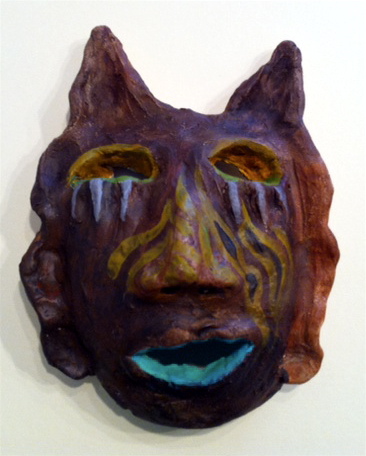
©2011, Hannah Klaus Hunter, Ceramic Cat Grief Mask

I like to imagine that there are as many ways to say good bye as stars in the sky. Like stars, each goodbye is unique, with its own distinct light. This was the last week in our bi-annual Young Adult Bereavement Art Group that we affectionately call "YABAG." Perhaps its me, perhaps it's time passing, but it seems that each group gets better and better.

In the first week we ask what brings each person to the group. One young woman's response, "Art, Bereavement, Support," formed the personality of our present group. That's what we did.

Aside from piloting my way through my own childrens' teenage years, facilitating through the 8 weeks is one of the most difficult things I do, and, at the same time, the most subtle. The knowledge of when to speak and when to refrain from speaking, when to lean on someone just a bit so that they'll speak even without feeling pressured is as delicate a process as inserting an IV needle.

For 8 weeks these young adults came week after week to sit with us and wind their way through their dark tunnels of grief. Each week, after the evening was over, my co-facilitator and I told each other that we wanted to adopt each one of them. Certainly, I wanted to rescue them from their pain. And, since that wasn't possible, I spent a lot of time figuratively sitting on my hands.

During the last two weeks, group members paint clay masks that they've made several weeks earlier and construct a memory box containing images and symbols that speak to their memories of the person who died. Often these are not literal pictures of the person, but images they've found in magazines or pictures they've painted inside and outside of the box.

I think of this box as a tool kit. Alongside the memories residing invisibly inside the box, there is also the knowledge of the coping tools they've learned in the group; how to address the non-grievers, how to approach a holiday without feeling you're about to fall off a cliff and how there are others like you with whom you can travel. Going it alone becomes an option rather than a necessity.

As the group ended that night we sat quietly. My co-facilitator and I had said our goodbyes. Group members expressed their wishes that the sessions could continue longer ("I could paint for hours"), but I thought that as usual, they would take off quickly, disappearing into the darkness of night. But they sat. And sat.

I'm one of those people who have to take it on faith that sometimes the most important thing I can do as a therapist is to listen and be present. An old mentor used to caution me over and over: "Don't rush the river." But I've always found so much comfort in doing.  It makes me feel better. But as I pondered these young people the next morning, I realized why they continued to sit for so long. There was  comfort in simply being together. No words, not even images were necessary. They and their memories could dwell comfortably in the half-light.